

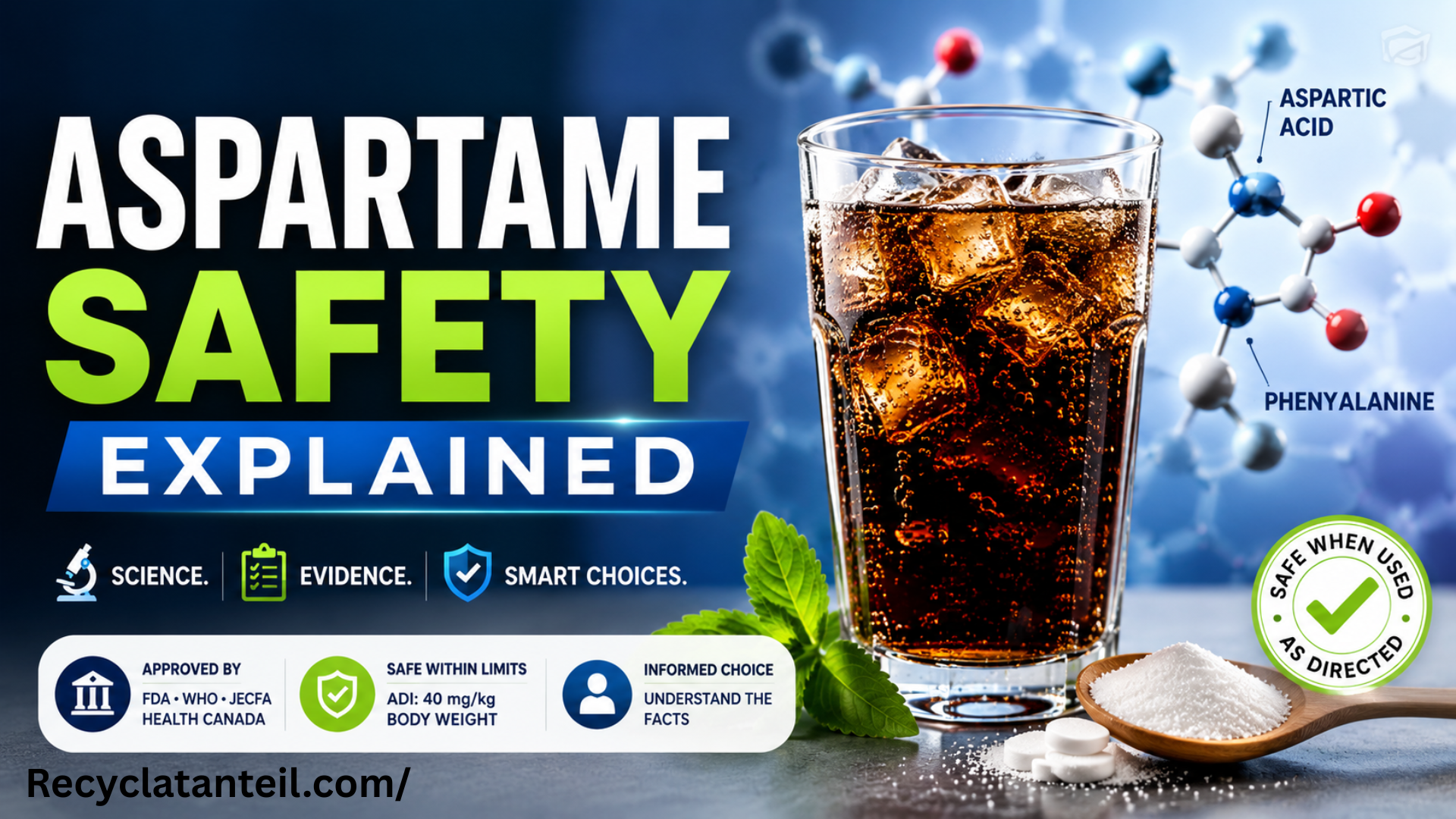
Aspartame safety depends primarily on dosage, not elimination. Regulatory bodies including the U.S. Food and Drug Administration, Health Canada, and the World Health Organization confirm that aspartame is safe within the acceptable daily intake of 40 mg per kilogram of body weight. While the International Agency for Research on Cancer classified it as “possibly carcinogenic to humans” (Group 2B), this reflects hazard identification, not proven real-world cancer risk.
In practical dietary terms, most people consume far below safe limits through diet soda, sugar-free foods, and low-calorie beverages. Understanding exposure levels, regulatory evaluations, and metabolic breakdown is essential for making informed choices about artificial sweeteners in everyday nutrition.
What Is Aspartame and Why It’s Used in Food
Aspartame is a non-nutritive sweetener widely used in diet beverages, chewing gum, yogurt, and sugar-free desserts. It is part of the broader category of artificial sweeteners designed to replace sugar while reducing calorie intake.
From what I’ve seen in dietary consumption patterns, most users are unaware of how frequently aspartame appears across processed foods. Even products not labeled as “diet” may contain it as part of sugar reduction strategies driven by global sugar reduction public health policies.
At a molecular level, it is a dipeptide made from aspartic acid and phenylalanine, both naturally occurring amino acids. Once consumed, it breaks down like protein components rather than accumulating in the body.
How Aspartame Is Made (Simple Scientific Breakdown)
Aspartame is produced by chemically linking amino acids and adding a small methanol group to enhance sweetness intensity. This structure allows it to be about 200 times sweeter than sucrose, meaning only tiny amounts are needed.
In real use, this high sweetness efficiency is what makes it valuable to sugar-free product manufacturers and diet beverage brands. A common mistake is assuming artificial structure implies toxicity, but toxicology risk assessment focuses on dose exposure rather than chemical origin alone.
Regulatory Approval: Why Health Authorities Allow Aspartame
Aspartame has undergone extensive evaluation by global food safety systems including the U.S. Food and Drug Administration, Health Canada, and the Joint FAO/WHO Expert Committee on Food Additives.
These organizations rely on toxicology studies, epidemiological data, and dietary exposure assessment models to determine safety thresholds.
Even after the 2023 IARC classification of aspartame as Group 2B, both the World Health Organization and JECFA reaffirmed that normal dietary consumption remains safe under current exposure levels. The key distinction is between hazard identification and actual risk at real-world intake levels.
Acceptable Daily Intake (ADI) Explained in Simple Terms
The acceptable daily intake (ADI) for aspartame is 40 mg/kg body weight, established through long-term toxicology testing and safety factor modeling.
In practical terms:
- A 70 kg adult can safely consume around 2,800 mg per day
- This equals roughly 10–14 cans of diet soda daily depending on formulation
In real use, dietary tracking studies show most consumers remain well below this threshold, even those regularly consuming sugar-free beverages.
The safety margin exists to account for variability in metabolism, dietary patterns, and long-term exposure differences across populations.
Real-World Intake: How Much Aspartame Is Too Much?
Real-life exposure depends on cumulative intake from multiple sources such as diet soda, sugar-free gum, protein bars, and low-calorie desserts.
In practice, exceeding the ADI would require consistent high-volume consumption of multiple processed products daily. A common mistake is evaluating single products instead of total daily exposure across the diet.
For example, someone consuming two diet sodas and a sugar-free snack daily is still typically far below regulatory safety limits.
What Happens When You Consume Aspartame Daily
Aspartame does not accumulate in the body. It is rapidly metabolized into amino acids and small amounts of methanol, which are processed through normal metabolic pathways.
In real use, long-term population data reviewed by Health Canada and the U.S. Food and Drug Administration show no consistent evidence of harm at approved intake levels.
However, one often overlooked factor is behavioral: regular consumption of sweetened products may reinforce preference for high sweetness intensity, which can indirectly affect dietary habits and metabolic health choices.
Aspartame and Cancer Risk: What Research Actually Says
The World Health Organization and International Agency for Research on Cancer classified aspartame as “possibly carcinogenic to humans” based on limited evidence.
This classification does not confirm a causal link. It indicates that current epidemiological studies show weak or inconsistent associations.
In real-world interpretation, this is where confusion occurs. Risk assessment by JECFA and regulatory agencies focuses on actual exposure levels, concluding that dietary intake within ADI limits does not present a measurable cancer risk.
Aspartame vs Sugar: Health and Metabolic Differences
Aspartame provides virtually no calories, while sugar contributes significant energy and directly affects blood glucose levels.
Sugar is strongly associated with metabolic syndrome when overconsumed, while aspartame is used in glucose management strategies for diabetes and weight control.
However, replacing sugar does not automatically improve diet quality. The overall dietary pattern remains the dominant factor in metabolic health outcomes.
Aspartame vs Other Sweeteners (Stevia, Sucralose, Saccharin)
Artificial sweeteners vary in structure and use but share a common goal of reducing sugar intake.
Sucralose is heat-stable and widely used in processed foods. Stevia is plant-derived and increasingly popular in natural product markets. Saccharin is one of the oldest approved sweeteners with long-term safety evaluation.
In real use, selection depends more on taste preference, dietary goals, and product formulation compatibility than on major differences in safety profiles established by regulatory authorities.
Who Should Avoid Aspartame (Phenylketonuria Risk)
Individuals with phenylketonuria (PKU) must avoid aspartame because they cannot metabolize phenylalanine properly.
This is why food labeling regulations in Canada, the United States, and the European Union require a phenylalanine warning statement on products containing aspartame.
Outside of PKU, no general population restriction is recommended by regulatory agencies.
Common Myths About Aspartame Debunked
A widespread misconception is that aspartame directly causes cancer or neurological disease. Large-scale regulatory reviews from the World Health Organization and FDA do not support these claims.
Another myth is that “natural” sweeteners are inherently safer than artificial ones. In toxicology risk assessment, safety depends on exposure level, not origin.
Misinterpretation of hazard classifications often leads to unnecessary concern despite low real-world risk.
Hidden Mistakes People Make When Consuming Artificial Sweeteners
One of the most common mistakes is treating “diet” foods as unlimited, leading to higher total intake across multiple products.
Another issue is ignoring cumulative exposure from different sources, including beverages, snacks, and medications.
In real use, people also underestimate how sweet taste reinforcement can influence long-term dietary behavior, even when calorie intake is reduced.
What Long-Term Studies Say About Aspartame Safety
Long-term studies evaluated by global regulatory bodies show no consistent evidence linking aspartame to major health risks when consumed within acceptable daily intake limits.
However, current research gaps remain in understanding long-term metabolic signaling and gut microbiome interactions under chronic exposure conditions.
This is where newer research in 2026 is focusing, shifting from acute toxicity to long-term dietary pattern effects.
Should You Use Aspartame? (Health Decision Guide)
Aspartame can be a useful tool for reducing sugar intake, especially in diabetes management or calorie-controlled diets.
The decision depends on:
- total dietary quality
- reliance on ultra-processed foods
- personal health conditions such as PKU
- overall sugar consumption patterns
In real-world nutrition planning, moderate consumption within regulatory limits is considered safe. The key is using it as a supportive tool rather than a primary dietary foundation.
Is Aspartame Worth It for Weight Control and Diabetes Management?
Aspartame is effective for reducing calorie intake without sacrificing sweetness, making it useful in weight management and diabetic dietary strategies.
However, it is not a standalone health solution. Long-term outcomes depend more on overall dietary habits, physical activity, and metabolic health management.
When used responsibly, it remains one of the most extensively studied and globally regulated food additives, supported by decades of scientific evaluation from major international authorities.
You May Like Smoothiepussit
FAQs
1. Is aspartame safe for daily consumption?
Yes, aspartame is considered safe for daily use when consumed within the acceptable daily intake of 40 mg per kilogram of body weight, as confirmed by the U.S. Food and Drug Administration and the World Health Organization. Most people consume far below this limit through diet drinks and sugar-free foods. Safety concerns only arise if intake consistently exceeds recommended exposure levels, which is uncommon in normal diets.
2. Does aspartame cause cancer or long-term health problems?
Current evidence from major health authorities does not show a confirmed link between normal aspartame consumption and cancer in humans. The International Agency for Research on Cancer classified it as “possibly carcinogenic” based on limited evidence, which means uncertainty—not proven harm. Long-term studies continue to monitor effects, but regulatory agencies still consider it safe within approved limits.
3. What is the biggest misconception about aspartame?
The most common misconception is that “artificial sweetener” automatically means toxic or unsafe. In reality, regulatory safety assessments focus on dose exposure, not whether a substance is synthetic or natural. Many people also wrongly assume hazard classifications like IARC Group 2B mean actual cancer risk, which is not the case.
4. Are there hidden risks of using aspartame long term?
One overlooked risk is behavioral rather than toxicological—regular use of sweeteners may reinforce a preference for highly sweet foods, which can influence overall diet quality. From what I’ve seen in dietary patterns, people often compensate by consuming other sweet or processed foods. While no confirmed long-term toxicity exists at approved levels, dietary habits can still indirectly affect metabolic health.
5. Is aspartame the right choice for weight loss or diabetes management?
Aspartame can be helpful for reducing sugar intake because it provides sweetness without significant calories or blood sugar spikes. However, it works best as part of an overall balanced diet rather than a standalone weight-loss strategy. A common mistake is relying on “diet” products without improving overall nutrition quality, which limits long-term results.
